
Bubble wrap has been doing the same useful job for decades: cushioning products, protecting surfaces and helping goods survive the fairly rough journey between a packing bench and a customer's door. So, when a business starts looking for paper bubble wrap alternatives, the question shouldn't just be "what can we swap the plastic for?" It's whether the replacement can protect the same products, work at the same packing speed and leave the customer with a sensible disposal route at the other end.
That sounds obvious, but it's where sustainable packaging decisions can get muddled. A paper product may look like the greener choice, yet if you need three times as much of it, it slows the line down or it leads to more damaged orders, the comparison changes. Equally, conventional plastic bubble wrap can be light and highly effective, but the recycling route has historically been less straightforward for households than paper and card. England's household collections are changing from 31 March 2027, when plastic film packaging and plastic bags will need to be collected with plastic recycling under Simpler Recycling.
This guide isn't really about declaring paper "good" and plastic "bad". It's about what to look for when you want a more sustainable protective wrap, particularly for e-commerce and despatch operations where material use, packing time, storage and damage rates all add up.
What is a Paper Bubble Wrap Alternative?
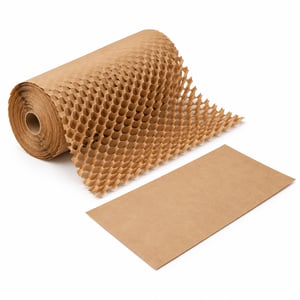
Usually, the term describes a paper-based protective material designed to do at least some of the work associated with traditional bubble wrap. That might mean cushioning an item against impact, preventing two surfaces from rubbing together, wrapping fragile products, or holding an item securely enough that it doesn't rattle around inside the carton.
Honeycomb paper is probably the most recognisable example. It starts as a compact roll or sheet and expands into a three-dimensional cellular structure as it's pulled through a dispenser. The opened paper creates overlapping layers around the product, which gives it more cushioning and holding power than a flat sheet of kraft paper.
Our Paperfill is one example. The kraft paper opens into an interlocking honeycomb structure that grips around the product, allowing the applications to replace the combination of bubble wrap and tape, while being fully recyclable, with the compact roll expanding significantly during use. For businesses short on packing-area storage, that last bit matters more than it might sound.
Start with Protection, not the Material
The first thing to work out is what the existing bubble wrap is actually doing. If it's there mostly to stop cosmetic scuffs on a boxed product, you're solving a very different problem from shipping ceramics, glassware or electronics.
Think about the journey as well. A product moving on a pallet between two controlled sites doesn't face the same handling as a small parcel travelling through an e-commerce carrier network. Drops, vibration, compression and repeated movement inside the carton can all expose weaknesses that weren't obvious at the packing bench.
This is why a paper bubble wrap alternative needs to be tested against the product, not just compared by material specification. Wrap a real item, pack it as operators normally would and see how much material is needed to hold it securely. If the paper option needs excessive layers to match the protection you already have, another format may make more sense.
Check Whether It's Actually Easy to Recycle
"Paper" and "recyclable" often get used almost interchangeably, but they aren't quite the same claim. Coatings, plastic laminates, adhesives and other materials can change how fibre-based packaging behaves in a recycling system.
The UK Government's Recyclability Assessment Methodology treats paper and board as a specific packaging material category and sets out how additional materials affect classification. For example, fibre-based packaging with more substantial plastic content may fall into the fibre-based composite category rather than straightforward paper and board. Current RAM guidance is worth bearing in mind if recyclability is one of the main reasons you're changing specification.
For an e-commerce customer, simple disposal is valuable. A mono-material paper wrap that can go into the normal paper and card stream is easier to understand than packaging that needs components separated or taken somewhere special. That's one reason uncomplicated paper formats are attractive, especially when you're trying to make recycling instructions clearer rather than adding another message to the box.
Kerbside-Recyclable Void Fill and Protective Wrap Aren't Quite the Same Thing
There's some overlap between protective wrapping and kerbside-recyclable void fill, but they solve slightly different problems. Wrapping protects the product itself. Void fill mainly controls the empty space around it. Sometimes one material can do both, but forcing one product to perform every protective function can mean using more material than necessary.
If a wrapped item still has a large amount of space around it, it may need a separate paper packaging filler or a better-fitting carton. Our other void fill range includes options such as biofil biodegradable loose fill, fastfil 100% recycled loose fill and micafil vermiculite loose fill, giving operations teams alternatives where a wrapping material isn't the right answer for the remaining space.
The bigger point is to avoid solving an oversized-box problem with handfuls of filler. Right-sizing the outer carton first can reduce both material use and the amount of protective packaging needed inside.
Storage Space Is Easy to Overlook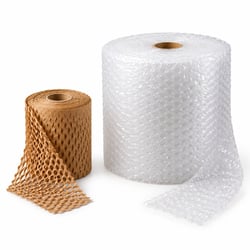
Traditional bubble wrap is mostly air, but storing rolls of it can take up a surprising amount of room. For a busy packing operation, especially one working from a fairly tight warehouse or mezzanine, that can mean bulky stock around the benches and frequent replenishment.
Expandable paper wraps arrive in a much denser form and create their protective structure as they're dispensed. Our Paperflex product information, for example, states that one roll can expand to wrap the same amount as 20 rolls of plastic bubble wrap. The exact saving in a real operation will depend on how each material is used, of course, but the principle is useful: compare the storage volume of the material before use, not just the metres on the roll.
It's also worth checking dispenser footprint. A material that saves pallet space but needs a cumbersome workstation setup might simply move the problem somewhere else. For smaller e-commerce operations, a desk-mounted or compact manual dispenser can often be a better starting point than jumping straight into powered equipment.
Packing Speed Matters Just as Much
Sustainable packaging has to work on a Monday morning when orders are backed up, not only during a tidy trial at the end of a quiet shift.
Watch how operators actually wrap products. Do they have to cut the material with scissors? Does it tear cleanly? Does the wrap stay around the product by itself or need tape? How many turns are needed? And can somebody new to the packing bench get a consistent result without much training?
This is one of the practical strengths of interlocking honeycomb paper. Paperflex's product specification says the material can be torn to the required amount and that its structure holds together without tape in suitable uses. Removing even one small step can matter when it's repeated hundreds of times.
Don't assume paper will automatically be faster, though. If your current bubble wrap process is already quick and highly standardised, measure the alternative properly. A sensible trial should include packing time per order as well as material cost and protection.
Consider the Customer Experience
Protective packaging is one of the first physical things a customer sees when they open an ecommerce order. That doesn't mean every parcel needs to look like a gift box, but there's a difference between opening a neatly wrapped product and pulling out a mass of loose protective material.
Paper honeycomb wraps can give products a more considered appearance, which is useful for gifts, cosmetics, homeware and other categories where unboxing matters. They can also make the sustainability message easier to understand because the material looks and feels recognisably paper-based.
Still, presentation shouldn't drive the whole decision. If a more decorative wrap needs extra cushioning elsewhere in the carton, account for that too. The best packaging experience is still receiving the product intact.
What About Plastic Bubble Wrap?
There are plenty of applications where plastic bubble wrap still performs well. It's lightweight, flexible, moisture resistant and gives reliable cushioning with relatively little material. Our plastic void fill range exists because plastic protective formats can still be the practical choice for particular products and packing environments.
The sustainability comparison is becoming more nuanced as well. From 31 March 2027, plastic film packaging and bags will need to be collected with household plastic recycling in England under Simpler Recycling. That should make the collection route more consistent than it has been, although collection doesn't mean every flexible plastic format will have identical recyclability in practice.
If moisture resistance, very low material weight or a particular cushioning performance makes plastic the better option, don't rule it out purely because it's plastic. Look at recycled content, the amount being used, the available recycling route and whether the format reduces damage.
Plastic Packaging Tax is relevant, but don't oversimplify it
The UK Plastic Packaging Tax is sometimes treated as if it's a tax on using plastic packaging generally. It isn't. The current tax applies to finished plastic packaging components manufactured in or imported into the UK that contain less than 30% recycled plastic, subject to the rules and exemptions. Businesses generally need to register when they manufacture or import 10 tonnes or more over the relevant period.
From 1 April 2026, the rate is £228.82 per tonne for chargeable plastic packaging. The 30% recycled-content threshold remains important, and HMRC has also confirmed further changes from April 2027 around how certain recycled plastics are treated.
A genuinely paper-based protective wrap may sit outside Plastic Packaging Tax because it isn't a plastic packaging component, but that doesn't mean switching to paper magically makes a business "compliant". Your wider packaging mix, manufacturing or importing activity and evidence still matter. It's better to treat tax as one input into the material decision, not the whole argument for changing it.
Think About EPR and Recyclability Too
Extended Producer Responsibility is making packaging recyclability a more commercial issue for affected UK businesses. RAM 2027 is the methodology producers must use to assess relevant household packaging placed on the market in 2027, with red, amber and green outcomes feeding into fee modulation.
Again, this doesn't mean every ecommerce business has exactly the same EPR responsibilities. But if you're reviewing sustainable packaging materials now, knowing the material composition and recyclability of each component is becoming increasingly useful. A vague supplier claim that something is "eco-friendly" doesn't give an operations or compliance team much to work with.
What about Loose Fill and other alternatives?
Bubble wrap isn't always the thing you should replace bubble wrap with. That sounds slightly odd, but once you look at what the product needs, another protective format may do the job better.
Our other void fill range includes biofil biodegradable loose fill, fastfil made from 100% recycled material, and micafil vermiculite loose fill. Loose fill is useful for irregular products and awkward gaps because it flows around the item rather than needing to be wrapped neatly. It can be a better answer where movement inside the carton is the main risk.
For surface protection and presentation, honeycomb paper is usually more relevant. For filling a lot of irregular void, loose fill may be easier. For lightweight products at high volume, on-demand air systems can keep storage requirements low. And for products that are already robust, the best answer might simply be a smaller carton with very little secondary protection at all.
Don't Forget the Cost per Successfully Shipped Order
Comparing price per roll is useful, but it's not enough. Paper bubble wrap alternatives can change several costs at once: material consumption, tape use, storage, packing time, workstation space and damage rates.
Say the paper wrap costs more per metre but needs no tape, occupies far less storage space and lets an operator pack the order faster. The higher consumable price might be irrelevant. On the other hand, if a cheaper-looking paper requires several layers and still leads to more breakages, the saving disappears pretty quickly.
A better measure is cost per successfully shipped order. Take the protective material used per parcel, add any tape or secondary filler, factor in packing time and keep an eye on damage and replacement rates. That gives you something much closer to the actual commercial effect of changing specification.
How to trial a Paper Bubble Wrap alternative
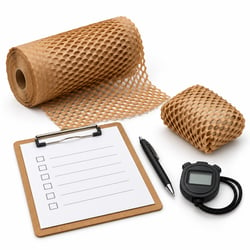
You don't need a complicated test programme to learn a lot. Pick a representative group of products, including the awkward ones rather than only the easiest items to pack, and run the alternative alongside your existing material.
- Record how much material is used per order.
- Time the packing process, including cutting, tearing and taping.
- Check whether the wrapped product still moves inside the carton.
- Look for scuffing, edge damage and impact damage after handling.
- Compare how much storage space each consumable needs.
- Ask operators which material is easier to use consistently.
- Check the end-of-life instructions you'll give the customer.
- Track damage and returns rather than judging the material after one successful parcel.
A week of real packing data is usually more useful than choosing from sustainability claims alone. If volumes are high, even a small difference in seconds or grams per order can become significant.
A quick checklist: what should you look for?
- Protection: does it cushion, wrap or block the product well enough for the actual journey?
- Recyclability: can the customer realistically recycle it through the intended collection route?
- Material construction: is it straightforward paper or does it contain coatings, laminates or other components?
- Material efficiency: how much do you need for one successful shipment?
- Storage: how much warehouse and packing-bench space does it use before dispensing?
- Packing speed: does it tear, wrap and hold easily without adding unnecessary steps?
- Tape use: can the structure hold itself around the product in your application?
- Presentation: does it suit the product and customer experience?
- Compliance: what evidence is available for recycled content, recyclability and any relevant tax or EPR reporting?
- Total cost: what happens to labour, damage, consumables and cost per successfully shipped order?
The Best Alternative Is the One That Works in Your Packing Operation
Paper bubble wrap alternatives have come a long way from simply scrunching kraft paper around a product. Honeycomb structures such as Paperflex can provide cushioning, surface protection and a strong unboxing presentation while giving customers a straightforward paper-based material to deal with afterwards. For plenty of ecommerce applications, that makes them a very practical switch.
But there isn't one protective material that wins every comparison. Plastic bubble wrap can still make sense where low weight, moisture resistance or a particular cushioning performance is important. Loose fill may work better for awkward voids. Sometimes the real improvement is right-sizing the carton and using less protection altogether.
That's why we'd always start with the product and the packing process rather than the material label. Our sustainable packaging range includes paper-based protective options alongside other lower-impact formats, and our wider void fill ranges cover applications where paper wrap isn't the best fit.
Need Help Finding the Right Bubble Wrap Alternative?
If you're looking to reduce plastic, improve recyclability or simply use less protective packaging without increasing damage, our team can help you compare the options against the products you actually ship. We can look at the protection required, material use, packing process and storage rather than just swapping one roll for another. Contact our team to discuss your packaging requirements.