

Ecommerce Packaging
Ecommerce packaging for high-volume retail and 3PL operations
Allpack supplies ecommerce packaging to online retailers, fulfilment centres and 3PLs across the UK. From boxes, mailing bags and protective packaging to automated equipment and complete pack stations, we help businesses reduce packaging costs, accelerate fulfilment and protect products throughout the delivery network.
Our team can assess your current packaging operation and recommend solutions that reduce material use, packing time, courier charges and product damage without compromising the customer experience.
Packaging that lowers your cost per order
The purchase price of ecommerce packaging is only one part of its overall cost. Material consumption, packing time, storage requirements, product damage and courier charges can all affect the true cost of fulfilling each order.
Allpack works with ecommerce retailers and 3PLs to assess how packaging performs throughout the fulfilment process. This can include reviewing the number and size of packaging formats being used, the amount of tape and void fill required, how long each order takes to pack and whether products are being overpacked.
Standardising packaging across suitable product ranges can simplify stock management and make it easier for packing teams to select the correct format. For businesses processing a varied order profile, introducing a more considered range of boxes, mailing bags and protective packaging can also reduce unnecessary material use without compromising product protection.
The right packaging solution should balance product protection, packing efficiency, presentation and cost. By examining the complete process rather than focusing solely on the unit price of a box or mailing bag, Allpack can help identify practical opportunities to improve efficiency and control the total cost per order.
Reducing damage and returns
Products can encounter repeated handling, movement and changes in orientation as they travel through courier and distribution networks. If the outer packaging, internal protection or closure method is unsuitable, products are more likely to move inside the parcel or become damaged during transit.
Effective ecommerce packaging begins with understanding the product. Its size, weight, shape, value and fragility should all inform the choice of box, mailing bag, cushioning and void fill. The packaging should hold the product securely, provide appropriate protection against common transit risks and remain practical for the packing team to assemble.
Allpack can review existing packaging alongside the products being dispatched and the way orders move through the distribution network. This helps identify whether damage is being caused by oversized boxes, insufficient cushioning, weak closure methods or packaging that is not suited to the product.
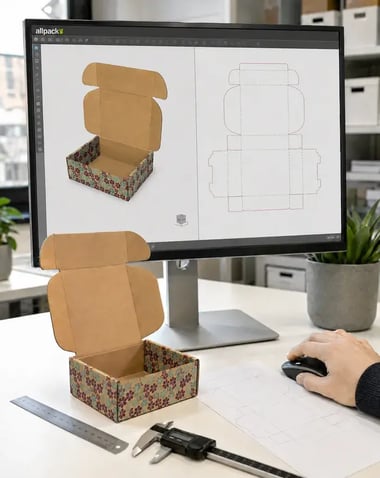
Where a standard format cannot provide the required protection, Allpack’s CAD Design Team can develop bespoke corrugated packaging around the product and its distribution requirements. A better-fitting design can improve product security while avoiding unnecessary layers of packaging. Reducing avoidable damage helps protect the customer experience and can also limit the operational costs associated with replacements, returns and repeat deliveries.
Ecommerce packaging designed around the product
When a well-known glasses retailer expanded its ecommerce operation, it needed protective postal packaging suitable for a growing range of spectacle frames.
Allpack’s CAD Design Team developed a streamlined corrugated solution based on the different frame sizes, shapes and protection requirements. The resulting design securely held the products during transit and supported both direct-to-customer deliveries and orders sent to stores for collection.
The packaging went into production across the retailer’s ecommerce spectacle range, helping the business increase the number of frames dispatched while reducing product damage.
Faster, more efficient fulfilment pack stations
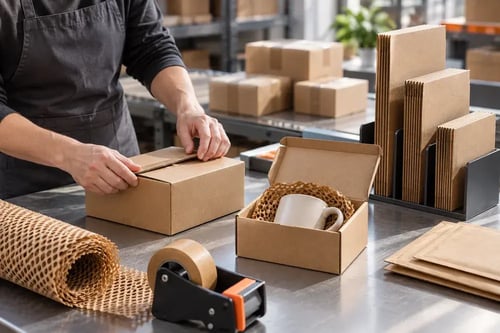
A well-organised packing area can make a significant difference to the speed and consistency of ecommerce fulfilment. Packaging materials should be easy to identify and within practical reach, while equipment and work surfaces should support the sequence in which each order is packed.
Allpack can assess the complete packing process, from selecting the correct packaging format through to protecting, sealing and labelling the parcel. This can reveal unnecessary movement, repeated manual tasks, inconsistent material use or equipment that is no longer suitable for the volume of orders being processed.
Depending on the operation, improvements could include arranging materials more effectively, introducing dispensers, using pre-set lengths of tape or protective material, or adding packaging machinery to support repetitive processes. Clear packaging specifications can also help different team members follow the same method, improving consistency across shifts and packing locations.
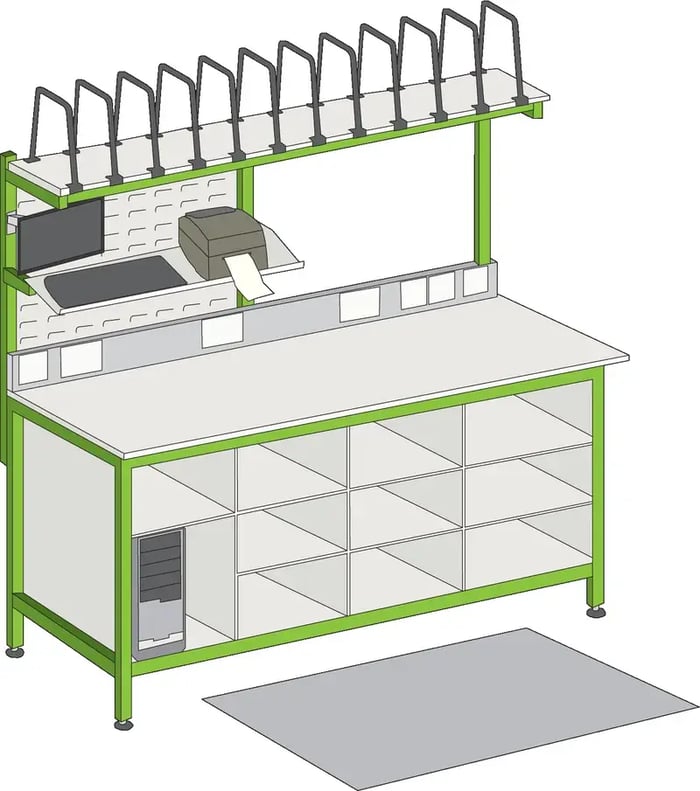
For higher-volume operations, Allpack can design and install bespoke pack stations around the products being handled, available workspace and required packing process. A purpose-designed station can bring the necessary materials and equipment together, helping businesses create a safer, more organised and scalable fulfilment environment.
Right-sized packaging and courier costs
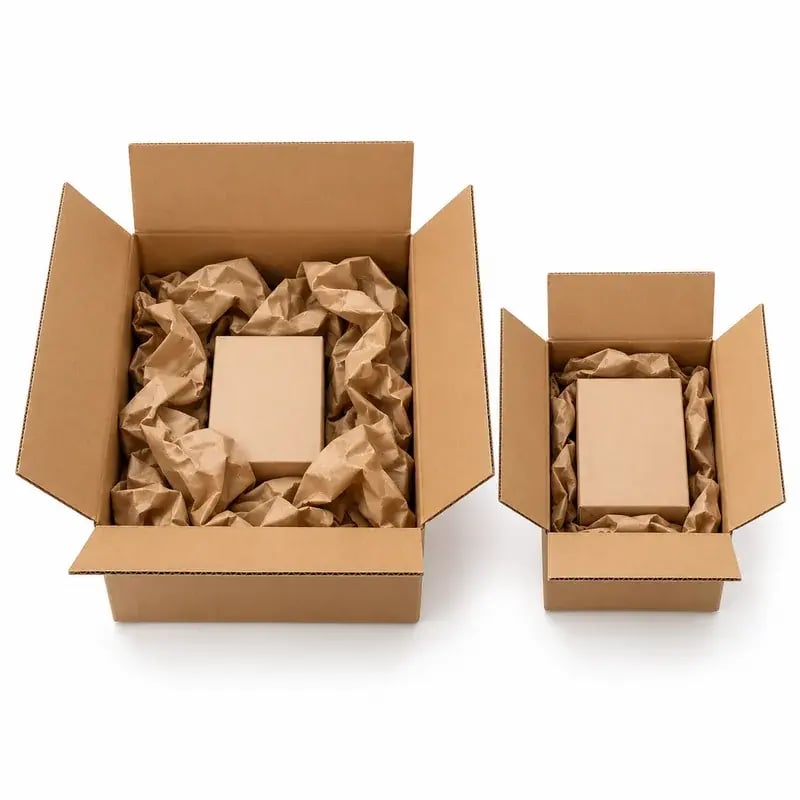
Oversized packaging can increase material consumption, storage requirements and the amount of void fill needed to secure each order. It may also increase parcel volume and affect delivery charges where a carrier uses parcel dimensions or volumetric weight when calculating its price.
Right-sized packaging aims to provide the protection a product requires without using more material or internal space than necessary. This does not mean selecting the smallest possible box. The packaging still needs to accommodate suitable cushioning, withstand the expected distribution environment and provide an efficient packing experience.
Allpack can review product dimensions, order combinations and existing packaging formats to identify opportunities for consolidation or right-sizing. For some businesses, this could involve reducing the number of rarely used box sizes. For others, it may mean introducing additional formats so that smaller products are not routinely dispatched in unnecessarily large cartons.
Bespoke corrugated packaging can also be developed for products that do not fit efficiently into standard formats. By considering the product, protective requirements and delivery method together, Allpack can recommend ecommerce packaging that balances material use, operational efficiency and parcel protection.
Any potential saving will depend on the business’s products, order profile, carrier agreement and current packaging process. A packaging review provides the evidence needed to determine where right-sizing is likely to deliver a practical commercial benefit.
Suggested Products

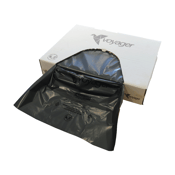
Voyager™ Mailing Bags -
Lightweight mailing bags for dispatching clothing, textiles and other non-fragile products. Secure closures help protect orders in transit, while custom-printed options support brand presentation. Their low weight can also help minimise packaging weight and storage requirements.
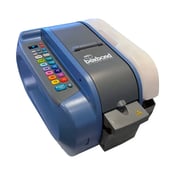
boxbond™ Turbo Taper -
A desktop water-activated tape dispenser for regularly sealing corrugated cartons, the Turbo Taper dispenses pre-set tape lengths to support faster, more consistent carton sealing and better control over tape consumption.
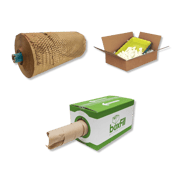
Voidfill -
Paper, air and protective void-fill solutions for preventing movement inside parcels. Allpack can help match the material and dispensing system to your products, packing volumes and available workspace.
Bespoke Branded Boxes -
Allpack's Bespoke Boxes are tailor-made for the ecommerce sector, offering customizable packaging solutions to enhance brand visibility, protect goods during transit, and optimize shipping costs. With a focus on durability, branding, and efficiency, our bespoke boxes ensure a seamless packaging experience for online retailers, boosting customer satisfaction and loyalty.

Brands we work with
We work with and supply a lot of brands that you have probably heard of, which shows just how dependent on us you can be. Check just some of them out below.
Our Accreditations & Certifications
Reaching our sustainability goals and customer requirements means that we have picked up a few accreditations and certifications over the years. To see how these benefit you please click the buttons below.
Ecommerce Packaging FAQs
What is ecommerce packaging?
Ecommerce packaging is the material used to protect, contain and dispatch products sold online. It includes mailing bags, postal boxes, tape, cushioning, void fill and product-specific protective packaging. The right combination should protect the order while controlling material, labour, storage and delivery costs.
Are mailers or boxes better for ecommerce?
Mailers are generally suitable for lightweight, flexible and non-fragile products, while corrugated boxes provide greater structure and protection. The best option depends on the product’s size, weight, fragility, value and delivery method. Some operations use both formats to avoid overpacking different types of orders.
How can ecommerce businesses reduce packaging waste?
Businesses can reduce packaging waste by consolidating packaging sizes, eliminating unnecessary layers, right-sizing parcels and selecting materials that are recyclable through appropriate UK waste streams. A packaging review can identify oversized formats, excessive void fill and opportunities to standardise materials across the operation.
How do I reduce damage and returns in ecommerce shipping?
Start by matching the outer packaging, cushioning and closure method to the product and likely transit risks. The contents should not move excessively within the parcel, and vulnerable areas should receive appropriate protection. Reviewing damage data by product and packaging format can reveal where changes will have the greatest effect.
What packaging does a 3PL need?
A 3PL usually needs a flexible range of boxes, mailers, tape, cushioning and protective materials that can accommodate several clients and product profiles. Clear packaging specifications, controlled stockholding and efficient pack-station layouts help 3PLs maintain consistency while responding to changing volumes and client requirements.