
For decades, bubble wrap has been the go-to solution for protecting fragile goods in transit. It is lightweight, familiar and widely used across ecommerce, manufacturing and third-party logistics operations.
Packaging requirements are changing, however. Businesses are under increasing pressure to reduce plastic consumption, improve recyclability and optimise packing efficiency without compromising product protection.
As a result, many warehouse and fulfilment teams are evaluating paper-based alternatives. Honeycomb paper wrap has emerged as one of the most effective options, offering many of the protective qualities of bubble wrap while delivering significant sustainability and operational benefits.
The question is not simply whether honeycomb paper wrap can replace bubble wrap. The more useful question is where each material performs best, and how businesses can build reliable packing workflows that minimise transit damage while supporting sustainability goals.
This guide compares honeycomb paper wrap and bubble wrap side by side, then explores how to select the right cushioning and void fill solutions for common fragile-item shipping scenarios.
Why Fragile Products Get Damaged During Shipping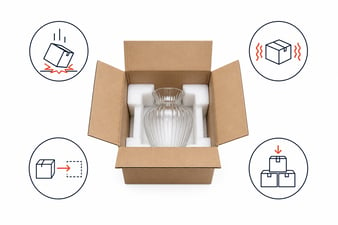
Many businesses focus heavily on the wrapping material itself. In reality, damage during transit can be caused by one of four factors:
- Impact from drops during handling
- Vibration throughout transportation
- Product movement inside the carton
- Compression from stacked parcels
No single packaging material eliminates every risk. Effective protection typically combines several elements:
- Product wrapping
- Cushioning
- Void fill
- Appropriate outer packaging
Understanding the role each layer plays is essential when evaluating alternatives to traditional bubble wrap.
Honeycomb Paper Wrap vs Bubble Wrap: The Core Comparison
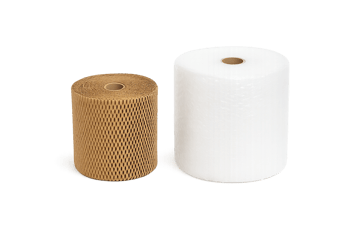
Both materials serve a similar purpose. They wrap around products to provide protection during storage and transportation. The differences become more noticeable when you consider warehouse operations, sustainability requirements and overall packing efficiency.
| Factor | Honeycomb Paper Wrap | Bubble Wrap |
|---|---|---|
| Surface protection | Excellent | Excellent |
| Shock absorption | Good | Very Good |
| Recyclability | Excellent | Often limited |
| Storage footprint | Extremely compact | Bulky |
| Tape required | Usually no | Usually yes |
| Packing speed | Fast | Moderate |
| Sustainability credentials | Excellent | Limited |
| Presentation | Premium appearance | Functional appearance |
Where Bubble Wrap Performs Well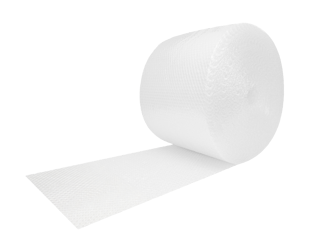
Bubble wrap remains highly effective for applications requiring strong shock absorption. The trapped air pockets help cushion impacts and can provide excellent protection for delicate products. It is also familiar to most packing teams, requiring little training or process adjustment.
For businesses already heavily invested in plastic-based packing materials, bubble wrap may continue to play a role in certain specialist applications.
Where Honeycomb Paper Wrap Excels
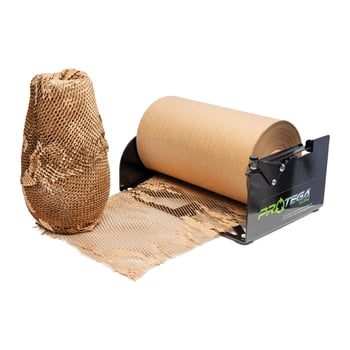
Honeycomb paper wrap offers a distinct set of advantages. Products such as Hexcel Paper Wrap use an expanding honeycomb structure that opens from a compact roll and interlocks around products during application.
This design creates several practical benefits:
- Self-clinging structure often removes the need for tape
- Recyclable, biodegradable and compostable construction
- Significantly reduced storage requirements
- Faster application during packing
- Improved presentation for customer deliveries
One of the biggest operational advantages is storage efficiency. A single roll occupies a fraction of the space required for traditional bubble wrap, helping fulfilment operations free up valuable warehouse capacity.
The material also tears easily to the required length, reducing handling time and helping operators maintain packing throughput during busy periods.
Choose honeycomb paper wrap when sustainability, storage efficiency and packing speed are just as important as product protection.
Step 1: Match the Packaging to the Risk
A common mistake is choosing packaging based solely on the product category. A more effective approach is to identify the primary shipping risk and build protection around it.
Risk Type 1: Scratches and Cosmetic Damage
Products such as glassware, ceramics, beauty products and decorative homewares are often vulnerable to surface damage rather than structural breakage. Even minor scuffs can result in customer complaints or returns.
Honeycomb paper wrap performs particularly well in these situations because the interlocking paper structure creates a protective layer around the product while preventing direct contact between items.
| Recommended Solution | Ideal Applications | |
|---|---|---|
| Risk Type 1 | Honeycomb paper wrap | Ceramics, decorative items, beauty products, giftware, glassware |
Risk Type 2: Moderate Impacts During Parcel Shipping
Many fragile products face repeated handling throughout their journey. Sorting facilities, courier vehicles and distribution centres all introduce opportunities for drops and impacts. Wrapping alone is rarely enough. Even a well-protected product can be damaged if allowed to move freely inside the carton.
| Recommended Solution | ||
|---|---|---|
| Risk Type 2 | Honeycomb paper wrap + Paper void fill | The wrap protects the product surface while the void fill limits movement within the box. |
This combination creates a far more effective protective system than relying on either material independently.
Step 2: Eliminate Empty Space
 .
.
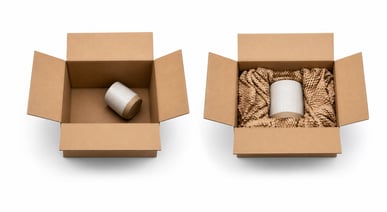
One of the most common causes of transit damage is excessive void space. When products can move around inside a carton, they gain momentum during transportation. Every movement increases the force generated when the item eventually collides with the carton wall or another product. This is why void fill plays such a critical role. The objective is not simply filling space. The objective is preventing movement.
Why Stretchable Paper Void Fill Works
Solutions such as BoxFill Hex are designed specifically for this purpose. Unlike traditional paper void fill that requires manual scrunching, the stretchable hexagonal structure expands as it is dispensed, creating protective cushioning while adapting to irregular shapes.
The system offers several practical benefits:
- No machinery required
- No refilling or reloading
- Stretchable design adapts to different products
- Fully recyclable construction
- Manufactured using 100% recycled content
- No pre-cut lengths, reducing waste
Because the material dispenses directly from the box, it can be introduced quickly across multiple packing stations without capital investment or operator training.
Choose BoxFill Hex when packing varied product sizes and irregular shapes that require flexible, adaptable void fill.
Step 3: Build a Reliable Paper-Based Packing Workflow
Many businesses assume replacing bubble wrap requires a complete redesign of their packing operation.
In practice, the transition is often straightforward.
A typical paper-based workflow looks like this:
Fragile Item Arrives at Packing Station
↓
Wrap Product Using Honeycomb Paper Wrap
↓
Place Product in Carton
↓
Fill Remaining Void Space with Stretchable Paper Void Fill
↓
Seal Carton and Dispatch
This approach removes the need for several traditional plastic materials, including:
- Plastic bubble wrap
- Loose-fill plastic packaging
- Plastic air pillows
At the same time, it maintains strong protection while improving recyclability throughout the packaging system.
Common Fragile Item Scenarios
Glassware and Ceramics
Glass and ceramic products require both surface protection and movement control.
Recommended Materials: Honeycomb paper wrap + Stretchable paper void fill
Why It Works: The wrap protects against scratches and direct impacts while the void fill prevents movement inside the carton.
Gift and Subscription Boxes
Presentation is often as important as protection. Customers increasingly notice and appreciate recyclable packaging solutions.
Recommended Materials: Honeycomb paper wrap + Stretchable paper void fill
Why It Works: The natural paper finish creates a premium unboxing experience while maintaining effective protection.
Electronics Accessories
Smaller electronic items can be vulnerable to abrasion and repeated movement during transportation.
Recommended Materials: Honeycomb paper wrap + Paper void fill
Why It Works: The combination protects product surfaces while stabilising the contents of the carton.
Mixed SKU E-commerce Orders
Orders containing multiple product types often present the greatest challenge. Packing teams need a solution that adapts quickly without slowing throughput.
Recommended Materials: BoxFill™ Hex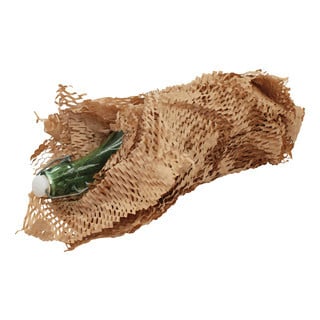
Why It Works: The expandable structure adapts to changing product dimensions while eliminating the need for multiple void fill materials.
Is Honeycomb Paper Wrap a Direct Replacement for Bubble Wrap?
For many applications, the answer is yes. Honeycomb paper wrap successfully replaces bubble wrap in a wide range of fulfilment environments, particularly where the primary objective is wrapping, separation and surface protection.
There are still situations where additional cushioning may be required for particularly delicate or high-value products.
In these cases, the focus should be on creating a complete protective packaging system rather than searching for a direct one-for-one replacement. The businesses seeing the greatest success with paper packaging are those that evaluate the entire packing workflow, from wrapping and cushioning through to void fill and carton selection. When viewed this way, paper-based solutions can deliver protection levels that satisfy both operational and sustainability objectives.
Get In Touch
Ready to transition away from plastic or optimise your existing paper workflows ahead of upcoming regulatory deadlines? Speak to our team about machine options, several are available on free-loan or rental arrangements at qualifying volumes.
Contact the Allpack team directly by emailing us at sales@allpack.uk.com, messaging us directly or calling us on 01543 396 700 to discuss your sustainable void fill needs.