
For a growing number of ecommerce businesses, the pressure to move away from plastic-based packaging is becoming increasingly present. Customers expect it, retail partners increasingly ask about it, and internal sustainability targets demand it. Yet despite good intentions, the transition quite often stalls.
The reason isn’t usually resistance. Instead, it’s largely about uncertainty. Teams worry about product protection, cost increases, packing speed, and whether a new material will perform as reliably as the old one. And those concerns are very much valid. After all, at its core, packaging is operational, not decorative. If it fails, everything else feels the impact.
The good news is that making a switch to sustainable, custom-designed ecommerce packaging does not have to mean disruption. With a structured approach, it can be easily phased, controlled and commercially sensible.
That’s why we’ve laid out a practical roadmap below!

Step 1: Understand What ‘Sustainable’ Means for Your Business
Before changing materials, clarify your objectives and goals. Sustainable packaging can mean many things: reduced plastic content, recyclability, lower carbon footprint, reduced overall material use, improved end-of-life outcomes (and much more). Research from Ellen MacArthur Foundation highlights that the most effective packaging transitions focus on elimination and reduction before substitution. Simply replacing one material with another without reducing overall material use often limits environmental benefit.
For ecommerce operations, this often means starting with right-sizing and material simplification before switching substrates entirely. That’s why it is key to be clear on your goal. Are you reducing virgin plastic? Improving recyclability? Lowering Scope 3 emissions? That clarity shapes every next step.
Step 2: Audit Your Current Ecommerce Packaging Setup
You can’t improve what you have not properly measured. For that reason, be sure to review the following:
- Average void space per shipment
- Damage and return rates linked to transit
- Packaging SKU complexity
- Packing time per order
- Plastic components currently used
This is both a sustainability and operational review. Often, businesses discover inefficiencies that make the sustainability transition easier than expected. For example, if a product is already over-packaged, moving to a custom-fit corrugated solution could reduce both plastic use and freight cost at the same time.
Step 3: Prioritise Reduction Before Replacement
The instinct is often to swap plastic mailers for paper alternatives. While this is certainly an effective (and speedy) approach, there’s also another opportunity, which sits in structural optimisation.
According to Packaging Europe, right-sizing and structural redesign consistently deliver both environmental and financial benefits by reducing excess material and transport emissions.
Custom ecommerce cartons designed around product dimensions quite often remove the need for excessive void fill entirely. In many cases, that alone eliminates plastic air pillows or bubble wrap without compromising protection. Reduction tends to be more stable operationally than wholesale material substitution.
Step 4: Test Sustainable Materials Properly
Not all paper-based or fibre-based solutions perform the same way. Strength grades, flute types, coatings, and moisture resistance all matter. As such, transitioning responsibly means conducting structured testing. That includes:
- Compression testing
- Drop testing
- Moisture exposure assessment
- Seal integrity checks
Smithers regularly reports that packaging failures during sustainability transitions often stem from insufficient transit validation rather than inherent material weakness. Testing prevents costly reversals. It also reassures internal stakeholders that sustainability does not mean compromise.

Step 5: Evaluate Total Cost of Ownership, Not Unit Price
Sustainable materials sometimes carry a higher per-unit cost. But focusing only on that number can mislead decision-making.
For example, custom-fit recyclable cartons may reduce dimensional weight, eliminating plastic void fill reduces material purchasing, and improves customer perception can influence repeat purchases. McKinsey & Company has highlighted that sustainable design initiatives often unlock efficiency gains that offset initial cost increases when evaluated holistically.
Therefore, the relevant question becomes: what does this packaging cost per shipped order, not per unit purchased?
When freight, labour, and returns are included, the economics often rebalance.
Step 6: Phase the Transition
As you might expect, operational disruption usually occurs when change is rushed. A controlled rollout may involve:
- Piloting new packaging on one SKU
- Testing during lower-volume periods
- Running dual stock temporarily
- Gathering feedback from warehouse teams
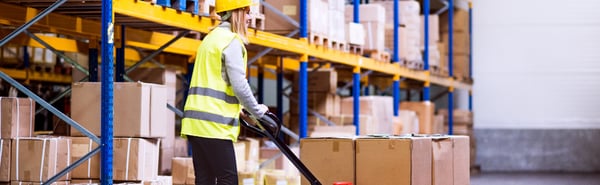
Phasing allows issues to surface early without risking entire fulfilment operations. It also gives teams confidence. Once packing teams see that new materials hold up in transit and do not slow workflow, internal resistance tends to disappear.
Step 7: Communicate Clearly with Customers
Customers increasingly expect sustainable packaging, but they also expect products to arrive intact. Clear labelling around recyclability or material changes helps set expectations. If plastic has been removed, tell them. If the pack is designed to fit more precisely and reduce waste, explain that.
Research from IBM’s Institute for Business Value shows that consumers respond positively when sustainability changes are communicated transparently and tied to measurable outcomes. As with many supply chain essentials, sustainability works best when it is visible and credible.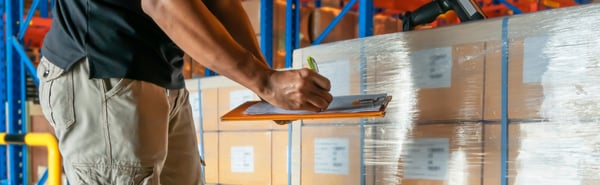
Common Concerns and Practical Reassurance
Here are some quick-fire answers to many common questions:
- Will sustainable packaging increase damage? Not if properly designed and tested.
- Will it slow packing lines? Not if structural design accounts for workflow.
- Will it increase cost? Possibly at unit level, but not necessarily at system level.
The transition becomes manageable when treated as an operational project rather than a branding exercise.
Looking at the Bigger Picture
Moving away from plastic-based ecommerce packaging is primarily a matter of aligning operational efficiency, regulatory readiness, and customer expectation. The strongest transitions tend to follow a simple pattern, similar to the following:
- Measure first
- Reduce where possible
- Redesign intelligently
- Test thoroughly
- Phase carefully
When approached this way, sustainable custom packaging often strengthens operations rather than disrupting them.
If you are considering transitioning your ecommerce packaging to more sustainable custom solutions, we are always happy to talk through a practical roadmap tailored to your products and fulfilment model. You can send us a message, email sales@allpack.uk.com, or call 01543 396 700 to explore realistic next steps without compromising protection or performance.