
The last few years have been a test of patience for anyone managing packaging procurement in the UK. Container shortages, volatile freight costs and unpredictable lead times have pushed businesses into a constant state of adjustment. What once felt like a stable, almost invisible background process has since become a regular boardroom topic. Every shift in global logistics seems to ripple straight through to warehouses, production lines, and customer fulfilment teams. Reports from the British Chambers of Commerce highlight how persistent shipping delays and rising input costs continue to affect UK firms across multiple sectors.
The result is an industry that has had to rethink how it sources materials, how it designs packaging, and how it insulates itself from the next supply shock.
The inflationary pressure shaping daily decisions

When freight rates jump or raw materials tighten, packaging quickly becomes more expensive. Paper, board, plastics, and adhesives are all exposed to global markets that move for reasons far beyond a mid-sized business’s control. The global freight index published by Drewry has shown swings of several hundred per cent since the pandemic, creating huge instability for businesses that rely on imported materials.
For a large number of procurement teams, the biggest frustration is not the cost itself, but the lack of predictability. Budgets become harder to plan. Long-standing agreements lose their stability. Even established product specifications need revisiting because components arrive late or not at all.
These pressures have changed buying habits. Businesses that once relied heavily on imported packaging now look more closely at domestic supply. An extra week of reliability can matter more than a marginal difference in price. Therefore, the desire for consistency has become a strategic concern rather than a simple operational preference.
Sustainability is no longer a separate discussion

Another shift has been the link between supply resilience and environmental performance. Companies that depended on imported plastics have found themselves exploring fibre-based alternatives because they are easier to source locally and carry a smaller carbon footprint. WRAP’s research into UK packaging highlights how businesses are increasingly choosing recyclable materials because they reduce exposure to supply fluctuations and help align with sustainability commitments.
Materials like FSC®-certified board, recyclable paper void fill, reinforced paper tapes, and compostable cushioning are both greener and also less exposed to the volatility of global polymer markets. The move towards localised, recyclable options reflects this broader pattern. When businesses rethink packaging specifications, they rarely want to revert to old habits once the crisis has passed.
How mid-sized businesses are adjusting their packaging strategies

Many mid-sized manufacturers and fulfilment teams have begun diversifying their supplier base to avoid single points of failure. Instead of relying on one large contract with a high-volume overseas provider, they build relationships with several UK-based partners who can react quickly to demand changes.
Some businesses are redesigning packaging entirely. Right-sizing is one example. Reducing excess board and eliminating unnecessary plastics not only saves money on materials but also reduces exposure to international supply volatility. A recent McKinsey analysis found that
packaging optimisation can reduce material use by up to 25%, which clearly lowers both cost and risk.
Others are increasing their stockholding of core items so they are not caught off guard during spikes or transport delays. The old philosophy of keeping inventory as lean as possible is slowly giving way to a more balanced approach that values resilience as much as efficiency.
The growing importance of reliable UK suppliers

As you might well expect, we’ve seen these patterns first-hand in recent years. Businesses want suppliers with strong UK warehousing, predictable stock levels, and access to alternative materials when primary options tighten. They also want guidance when reviewing packaging choices. A company may not know if a recyclable paper tape can replace an acrylic one without affecting productivity. They may also be unsure whether a change in cushioning could affect product protection. Access to technical support and guidance has become just as important as the packaging itself.
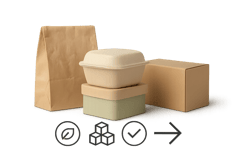
The push for domestic resilience has also strengthened demand for sustainable product lines. Businesses are looking for solutions that include recycled content, can be easily recyclable, compostable, or made from responsibly sourced materials, partly because these options help reduce risk in the supply chain. Our Sustainable Packaging range supports this shift with fibre-based void fill, recycled-content products, FSC®-certified cartons, paper tapes, and other alternatives that remove unnecessary dependency on global polymer markets.
Where is the market heading next?
The UK packaging industry is entering a phase where flexibility is valued as highly as cost. Procurement teams want products that are available, not just affordable. They want suppliers who can help them adapt packaging specifications in a measured, confident way. They also want sustainable solutions that stand up to regulatory pressure and customer expectations.
These changes point to an operating environment where robust supply chains and responsible material choices are very much connected. Packaging that supports both is becoming the new standard (rather than a premium option).
If you would like an audit of your current packaging or a more detailed breakdown to uncover opportunities to cut waste, improve protection, and strengthen operational performance, we can help. Send a message, email sales@allpack.uk.com, or call 01543 396 700 today to find out how we can help.