
Not so long ago, cold chain packaging was something most consumers rarely thought about. Today, it's part of everyday life.
Whether it's a weekly meal kit, artisan cheese, specialist pharmaceuticals, or fresh seafood ordered online, customers have become accustomed to products arriving chilled, fresh and ready to use. They expect those goods to be delivered safely, regardless of the weather, and increasingly they expect the packaging to reflect the same environmental values as the products inside.
For operations and procurement teams, those expectations have raised the bar considerably. The challenge is no longer simply keeping products cold. It's doing so efficiently, consistently and sustainably, while balancing material costs, packing speed, transport requirements and customer experience.
There is not a single packaging solution that suits every chilled shipment. A local producer delivering overnight has very different priorities from a national retailer dispatching thousands of temperature-sensitive parcels every evening. The most successful businesses understand that cold chain packaging isn't about insulation, it's about designing a complete system that protects products from warehouse to doorstep.
Why Cold Chain Packaging Matters More Than Ever
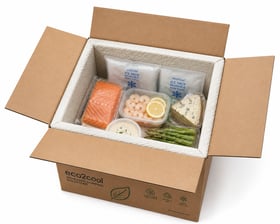
The purpose of the cold chain is deceptively simple. Keep products within their required temperature range from the moment they leave storage until they reach the customer.
In practice, achieving that consistently is anything but straightforward. Every stage of the journey presents opportunities for temperatures to fluctuate. Products may spend time on loading bays, move between distribution hubs, sit in delivery vehicles during traffic delays or wait outside a customer's property before being unpacked. Even relatively short periods outside the recommended temperature range can affect product quality, reduce shelf life or, in some cases, make products unsuitable for use altogether.
For food manufacturers, this can mean spoilage and unnecessary waste. For pharmaceutical suppliers, the consequences may be even more significant, particularly where temperature-sensitive medicines are involved.
The commercial impact is equally important. A damaged product isn't simply replaced. It often results in customer service costs, additional transport, replacement packaging and, perhaps most importantly, a loss of confidence in the brand. Customers rarely see the complexity of the logistics operation behind the scenes. They simply judge the condition of the parcel that arrives on their doorstep.
That's why effective cold chain packaging should be viewed as an investment in product quality rather than an unavoidable cost.
Sustainable Doesn't Mean Compromising Performance
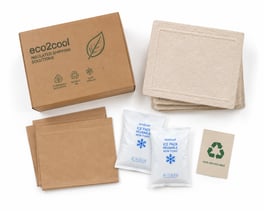
There has long been an assumption that highly insulated packaging and sustainability pull in opposite directions.
Effective temperature control often relied heavily on expanded polystyrene, multiple plastic components or bulky packaging that performed well thermally but created challenges once it reached the customer, being difficult or unable to be recycled.
The market has moved on considerably. Modern Insulated Shipping Boxes demonstrate that businesses no longer need to choose between protecting chilled goods and reducing environmental impact. Advances in materials and packaging design have made it possible to achieve reliable thermal performance while supporting wider sustainability objectives.
That shift has been driven by more than legislation. Customers increasingly notice the packaging as much as the product itself. Opening a box filled with excessive plastic can feel at odds with purchasing locally sourced food or environmentally conscious products.
Procurement teams are recognising the same trend internally. Sustainability targets are no longer confined to annual reports. They increasingly influence purchasing decisions throughout the supply chain, including packaging materials.
The strongest solutions are those that balance environmental responsibility with operational performance, recognising that neither objective should come at the expense of the other.
The Box Is Only One Part of the Story
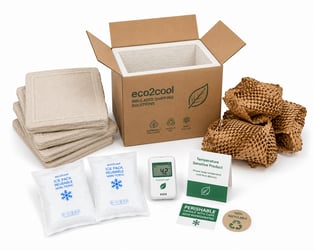
It's easy to think an insulated box does all the work. Imagine preparing two identical chilled food deliveries. Both use the same insulated carton. One contains carefully positioned gel packs, products packed straight from temperature-controlled storage and minimal empty space inside the box.
The other contains products that have been sitting at room temperature during picking, loosely packed with significant movement inside the carton and cooling packs placed almost as an afterthought. Despite using identical packaging, those two deliveries are unlikely to perform in the same way.
Successful temperature-controlled packaging depends on several small decisions working together. Products should begin their journey at the correct temperature rather than relying on the packaging to cool them down. Cooling packs need to be positioned strategically so cold air circulates effectively throughout the parcel. Empty space should be minimised, reducing unnecessary air that can warm during transit and allowing products to shift against one another.
Where void space remains, it can often be managed using sustainable cushioning materials that both protect products and help create a more stable internal environment. While insulation controls external heat transfer, good packing practice prevents internal movement that can damage delicate chilled goods during transport.
Viewed this way, the insulated box becomes one component within a carefully designed shipping system rather than a standalone solution.
Choosing the Right Sustainable Cold Chain Packaging
Selecting cold chain packaging isn't about finding the product with the highest insulation rating. It's about understanding what your operation actually requires.
Start with the Product
Different chilled goods present very different packaging challenges. Fresh meat and seafood often require robust temperature control combined with leak-resistant packaging. Dairy products may have shorter delivery windows but still demand consistent cooling throughout transport. Meal kits combine multiple ingredients with varying storage requirements, while chocolates and confectionery can be particularly sensitive to seasonal temperature changes.
The packaging specification should reflect the characteristics of the product rather than following a one-size-fits-all approach.
Consider Transit Time
The distance a parcel travels has a direct impact on packaging decisions. An overnight regional delivery allows for a very different insulation strategy than a forty-eight-hour national shipment or an international delivery involving multiple distribution hubs.
Longer journeys generally require greater thermal resilience, but they also introduce more opportunities for handling, stacking and vibration. That makes physical protection just as important as temperature performance.
Operations teams should evaluate packaging against realistic delivery scenarios rather than ideal conditions. The occasional traffic delay or missed delivery attempt should already be factored into the packaging strategy rather than treated as an unexpected exception.
Think Beyond Compliance
Sustainability is no longer simply about meeting environmental regulations. Increasingly, it influences customer loyalty, purchasing decisions and brand perception.
Businesses investing in sustainable cold chain packaging often find that the benefits extend well beyond compliance. Packaging that is easier to recycle, contains fewer mixed materials or visibly reduces plastic use helps reinforce wider sustainability commitments that customers increasingly expect to see.
That doesn't necessarily mean selecting the most environmentally ambitious option available. It means choosing packaging that delivers genuine environmental improvements without compromising product protection.
Don't Overlook Warehouse Efficiency
Even the best packaging solution can become frustrating if it slows production. Packing stations that handle hundreds or thousands of chilled parcels each day need materials which are straightforward to assemble, easy to store and consistent for operators to use.
Reducing unnecessary complexity can improve productivity while also reducing packing errors. Simple, repeatable processes tend to produce more consistent results than complicated systems requiring extensive operator judgement. For procurement teams, operational efficiency should carry just as much weight as purchase price when evaluating different packaging options.
Reducing Food Waste Is Sustainability Too
Sustainability discussions often focus on packaging materials. Paper instead of plastic. Recyclable instead of non-recyclable. Renewable instead of fossil fuel-based. Those conversations matter, but they only tell part of the story.
If inadequate packaging allows chilled products to spoil before they can be consumed, the environmental impact extends far beyond the packaging itself. The resources used to grow, produce, refrigerate and transport those goods have also been wasted, along with the emissions associated with replacing them.
In many situations, preventing food waste delivers a greater environmental benefit than making relatively small reductions in packaging material. That doesn't mean using excessive packaging. It means using packaging intelligently.
A well-designed insulated shipping system that consistently protects products during transit often represents the more sustainable choice because it prevents avoidable waste across the entire supply chain.
The objective should always be optimisation rather than minimisation.
Looking Ahead: What Will Cold Chain Packaging Look Like?
The next few years are likely to bring continued innovation across temperature-controlled logistics.
Packaging materials will become lighter without sacrificing insulation performance. More recyclable and renewable materials will continue entering the market as businesses seek practical alternatives to traditional systems. Automation will play a greater role in helping fulfilment centres maintain consistency while increasing throughput.
Data will also become increasingly important. Rather than relying solely on theoretical performance, businesses are beginning to monitor real-world shipping conditions more closely, allowing packaging specifications to evolve based on actual transit data rather than assumptions.
Customer expectations are unlikely to stand still either. Tomorrow's consumers will continue expecting chilled goods to arrive in excellent condition, but they will also expect businesses to demonstrate genuine progress towards more sustainable packaging solutions.
The organisations that succeed will be those that view cold chain packaging as part of their overall customer experience rather than simply another shipping cost.
Final Thoughts
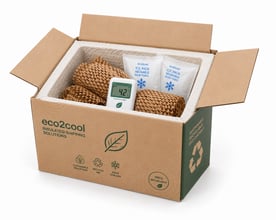
Choosing sustainable cold chain packaging has become far more sophisticated than selecting an insulated box from a catalogue.
It requires an understanding of products, transit times, warehouse operations, sustainability goals and customer expectations, all working together as part of a carefully considered logistics strategy. There is rarely a perfect solution for every business, as each supply chain is different.
What remains consistent is the principle behind successful chilled goods logistics. Packaging should protect products, minimise waste, support efficient warehouse operations and provide customers with confidence that what they ordered will arrive exactly as intended.
The businesses achieving that balance are not necessarily using the most expensive packaging or the most complex systems. More often, they're the ones that have taken the time to understand what their products genuinely need and built their cold chain around those requirements.
Get in Touch
If you're reviewing your temperature-controlled packaging or looking for more sustainable ways to ship chilled goods, the Allpack team can help. Send us a message, call us on 01543 396 700, or email us on sales@allpack.uk.com.
With the right packaging strategy, protecting chilled goods doesn't have to come at the expense of sustainability. The most effective solutions are those that deliver both.