
A pallet that arrives safely at a regional distribution centre can fail halfway through a rail journey if the packaging specification was built around road transport assumptions. A carton that performs perfectly during a same-day delivery run may soften, bow, and collapse after several days inside a shipping container exposed to moisture and temperature changes.
Most packaging decisions begin with the transport mode people know best. In the UK, which is usually road freight. The reality is that modern supply chains rarely rely on a single mode of transport. Goods frequently travel by lorry, container ship, rail freight service, and then another lorry before reaching their destination.
The cost of getting the specification wrong can be significant. Cargo damage across logistics operations creates product loss, claims, delays, and replacement shipments. The packaging itself is often a small percentage of the shipment cost, yet it frequently determines whether the cargo arrives in sellable/usable condition.
This guide examines how road, rail, and sea freight affect packaging differently, then explores practical transport packaging solutions that help cargo withstand the realities of each journey.
Road Freight: Managing Vibration, Movement, and Multiple Handling Points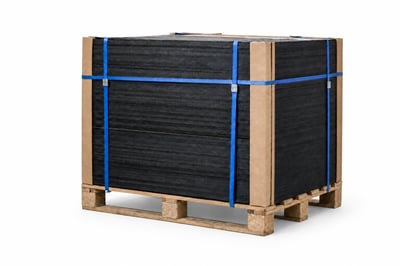
Road transport remains the most familiar freight environment for many UK businesses. According to the Department for Transport's Road Freight Statistics, GB-registered HGVs lifted 1.59 billion tonnes of goods domestically in 2024.
A typical road shipment encounters thousands of minor movements before reaching its destination. Engine vibration travels through the trailer floor. Uneven road surfaces generate vertical shocks. Roundabouts, lane changes, and cornering create lateral forces that encourage loads to shift. Emergency braking places sudden stress on pallets that appeared perfectly stable when loading began.
Duration matters as much as force. A two-hour regional delivery creates very different packaging demands from an overnight trunk route covering several hundred miles. Sustained vibration gradually loosens unstable loads, particularly where products have not been properly contained.
Position within the trailer can also influence risk. Pallets loaded towards the rear of a vehicle generally experience more movement than those closer to the cab. Multi-drop routes introduce another variable because load distribution changes throughout the journey. For road freight, the primary objective is maintaining pallet stability.
High-quality strapping plays an important role here. SecuraStrap™ Strapping helps secure palletised loads against continuous vibration and movement. PET variants are particularly well suited to heavier loads because they offer greater strength and tension retention than standard polypropylene alternatives. Recycled PET and Plastic Tax Compliant polypropylene options also support sustainability targets without compromising performance.
Outer packaging deserves equal attention. Durabox™ Pallet Boxes provide reinforced corrugated protection for palletised shipments while improving load organisation. Right-sizing pallet boxes can improve trailer utilisation, allowing operators to maximise available vehicle space across busy delivery schedules.
Corner protection should not be overlooked. Edge protectors help prevent strapping from damaging cartons while reducing the risk of forklift contact damage during unloading and delivery operations.
Rail Freight: The Vibration Profile That Catches Packers Out
Rail freight continues to grow in strategic importance as businesses look to reduce emissions and shift more cargo away from road transport. The UK government has set a target to grow rail freight by at least 75% by 2050, with Network Rail also outlining freight growth priorities through its rail freight strategy work.
Many logistics teams underestimate how different rail vibration feels from road vibration.
Road transport creates irregular movement. Rail transport introduces rhythmic, repetitive forces. Track joints, points, crossings, and changes in track condition generate a repeated vibration pattern that can gradually fatigue packaging materials over long distances.
Products that survive a road journey comfortably may begin moving within their packaging after hours of sustained rail vibration. Internal cushioning systems often experience greater stress than many operators expect.
Marshalling yards introduce another challenge. During coupling and uncoupling operations, wagons can experience sudden longitudinal shocks that are rarely encountered in standard road transport. These forces place significant pressure on load containment systems.
Although rail freight generally involves fewer handling events than multi-drop road deliveries, the loads themselves often experience greater sustained movement over longer periods. Cargo restraint becomes particularly important in this environment.
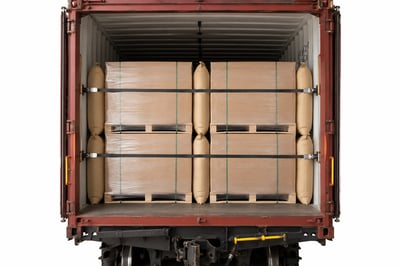
Contain-A-Pac™ Dunnage Bags help brace loads inside containers and rail wagons, reducing movement during vibration and coupling events. Inflated between cargo units, they fill empty spaces and provide additional stability without adding significant weight. Their reusable, recycled paper construction also makes them an attractive option for businesses seeking to reduce plastic consumption.
Strapping selection becomes increasingly important on rail routes. SecuraStrap™ Strapping suits applications where operators need dependable load restraint across longer, more repetitive vibration cycles.
Journey duration should influence internal packaging specifications too. A product travelling several hundred kilometres by rail may require more substantial void fill and cushioning than the same item travelling a short distance by road.
Dust and moisture protection also deserve consideration, particularly where cargo moves through less controlled environments. Pallet covers and shrink protection can prevent contamination issues before they become expensive quality-control problems.
Sea Freight: Packaging for the Harshest Conditions in the Supply Chain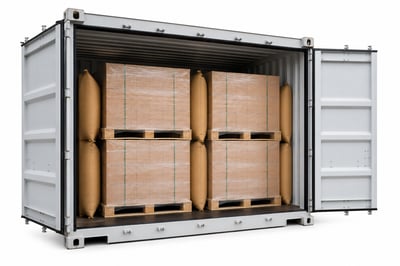
Sea freight presents the most demanding transport environment most businesses will encounter.
The Department for Transport's Port Freight Statistics show that UK ports handle hundreds of millions of tonnes of freight each year. Much of that cargo spends days or weeks inside shipping containers before reaching its destination.
Unlike road and rail transport, sea freight subjects cargo to continuous multi-directional movement.
Containers experience roll, pitch, and yaw throughout the voyage. These forces continue day and night, often for weeks at a time. A pallet that remains perfectly stable during an eight-hour road journey may gradually shift during a long sea crossing if insufficient restraint has been provided. Moisture presents an equally serious challenge.
Many logistics professionals are familiar with the phenomenon known as container rain. The TT Club's guidance on moisture damage in containers explains how temperature changes can cause condensation to form inside containers before dripping onto cargo below. Standard corrugated packaging can lose strength surprisingly quickly once exposed to sustained moisture.
Stacking pressure creates another issue. Shipping containers are often stacked several units high aboard vessels, creating compressive forces that far exceed those encountered in road trailers or rail wagons.
Extended dwell times add further complexity. Cargo may sit at ports awaiting customs clearance, transhipment, or onward transportation. Packaging must maintain integrity throughout the entire journey rather than simply surviving the voyage itself. For sea freight, load restraint is critical.
Contain-A-Pac™ Dunnage Bags are particularly effective in containerised shipping environments. Positioned between pallets and cargo units, they minimise movement during rolling and pitching while helping distribute pressure more evenly throughout the load.
Container utilisation also influences transport costs directly. Durabox™ Pallet Boxes support efficient container loading whilst providing strong protection for palletised goods. Where moisture exposure is likely, businesses should also evaluate moisture-resistant board grades or suitable liner materials.
Heavy cargo often requires stronger load containment systems. SecuraStrap™ Strapping supports pallet and load stability where shipments face prolonged handling, movement, and storage periods.
Additional protection measures may include:
- Shrink pallet covers
- Moisture-resistant top sheets
- Silica gel desiccants
- Reinforced pallet stabilisation systems
These additions are relatively inexpensive compared with the potential cost of a damaged international shipment.
The Challenge of Multi-Modal Transport
Few shipments travel by a single transport mode from origin to destination.
A manufacturer in the Midlands may send goods by road to a port. The shipment then travels by sea before completing its journey by road again in another country. European supply chains increasingly incorporate rail movements as well.
This creates a common mistake in packaging specification.
Teams often design packaging around the first transport leg because it is the most visible part of the process. The shipment then encounters a more demanding environment later in the journey.
Successful packaging specifications follow a different principle.
Identify the most demanding stage of the journey first. Then build the packaging system around that requirement.
For most international shipments, sea freight represents the highest-risk environment. Container loading and unloading frequently create the highest-risk handling events. Extended storage periods often represent the greatest exposure to environmental damage.
Less than Container Load freight deserves particular attention. Shared containers introduce additional opportunities for physical contact damage because cargo from multiple shippers occupies the same space. Strong outer packaging and effective pallet stabilisation become increasingly important in these situations.
Mapping the complete transport journey before specifying packaging typically produces better outcomes than focusing solely on the first leg.
Choosing the Right Transport Packaging Solution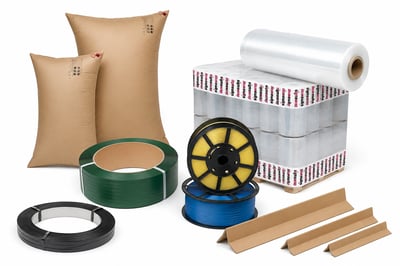
Transport packaging performs a simple but important function: ensuring products arrive in the same condition they left.
Road freight places the emphasis on load containment and handling protection. Rail freight rewards packaging systems that can withstand prolonged vibration and coupling shocks. Sea freight demands the highest level of protection against movement, moisture, pressure, and extended transit times.
The most effective specifications acknowledge these differences rather than treating every transport mode as if it creates the same risks.
A stable pallet, appropriate strapping, well-designed outer packaging, and effective void management often prevent far more damage than simply increasing packaging thickness.
| Transport Mode | Primary Risk | Key Packaging Solution | Secondary Considerations |
|---|---|---|---|
| Road Freight | Vibration, lateral forces, handling events | SecuraStrap™ Strapping, Durabox™ Pallet Boxes | Edge protectors, right-sizing, load stability |
| Rail Freight | Rhythmic vibration, coupling shocks, duration | Contain-A-Pac™ Dunnage Bags, SecuraStrap™ Strapping | Void fill, cushioning, dust/moisture protection |
| Sea Freight | Multi-directional movement, moisture, stacking pressure, extended transit | Contain-A-Pac™ Dunnage Bags, Durabox™ Pallet Boxes, SecuraStrap™ Strapping | Shrink covers, moisture-resistant board, desiccants |
Get In Touch
Reviewing transport packaging specifications before problems arise is less expensive than dealing with damaged goods claims afterwards.
Whether your cargo travels by road, rail, sea, or a combination of all three, our team can help identify packaging solutions suited to your transport environment.
If you are reviewing pallet stability, container loading practices, or multi-modal packaging specifications, speak directly with our team about available transport packaging options and the Pallet Stabilisation Consultation Service.
Send us a message, email sales@allpack.uk.com, or call us on 01543 396 700 to arrange a consultation.