
Walk through almost any warehouse and you'll see stretch film being applied to pallet after pallet without much thought. It has become part of the background. Yet few operations know exactly how much film they use per pallet, how consistently it is applied, or what that consumption really costs over the course of a year.
The financial picture has changed over the last 18 months. The Plastic Packaging Tax increased to £228.82 per tonne from April 2026 for plastic packaging containing less than 30% recycled content. At the same time, businesses have less than a year to prepare for the 31 March 2027 Simpler Recycling deadline, when plastic films and flexible packaging will need to be collected separately.
Viewed together, these developments make pallet wrap worth revisiting. A packaging specification that looked perfectly reasonable a few years ago may now be adding unnecessary material costs, labour time, tax exposure, and waste handling costs.
If your pallet wrap specification has not been reviewed recently, now is a sensible time to ask whether it is still the right fit for your operation.
The Hidden Cost of Stretch Film
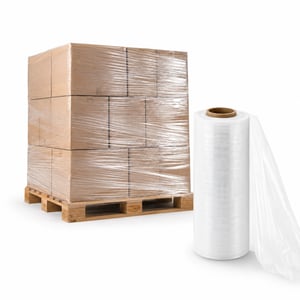
Stretch film rarely appears as a significant line on a procurement report. That is precisely why it often escapes scrutiny. Most businesses focus on the price per roll rather than the total cost of wrapping each pallet. Once labour, waste management, tax, and material overuse are considered, the numbers begin to tell a different story.
The first area to examine is material usage. Manual wrapping is naturally inconsistent. One operator may apply six layers of film, another eight, whilst someone else wraps heavily around pallet corners for reassurance. Each pallet leaves the warehouse securely wrapped, but not necessarily efficiently wrapped.
Labour costs deserve equal attention. Wrapping pallets by hand is repetitive, physically demanding work. Small differences in wrapping time become significant across hundreds or thousands of pallets every month. Waste disposal has also become more important. Plastic stretch film cannot simply disappear into general waste. Businesses now need to think about segregation, collection, recycling, and the associated operational costs.
Even shipping costs can be influenced. The additional weight of excessive film may appear negligible on a single pallet yet multiplied across annual volumes it contributes towards transport costs that many organisations never associate with packaging.
Perhaps the most useful question is also the simplest: when did you last measure how much stretch film your business actually uses per pallet?
Plastic Packaging Tax Has Changed the Calculation
Cost control no longer centres solely on purchasing film at the lowest possible price.
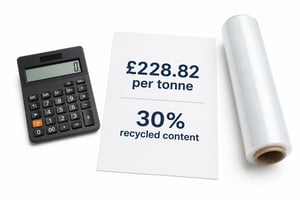
Plastic Packaging Tax applies to plastic packaging manufactured in or imported into the UK where it contains less than 30% recycled plastic. Since April 2026, the rate has increased to £228.82 per tonne.
For businesses consuming significant quantities of stretch film, which becomes a meaningful annual expense.
Switching to recycled-content film can remove that tax liability entirely whilst supporting wider sustainability objectives. Improvements in manufacturing quality also mean many recycled-content films now perform far better than earlier generations, making the decision less of a compromise than it might once have been.
Packaging also forms part of Extended Producer Responsibility obligations. Flexible plastic formats continue to receive increasing attention as businesses review recyclability, recycled content, and future eco-modulated fees.
The March 2027 Deadline Is Closer Than It Appears
The next significant milestone arrives on 31 March 2027, when Simpler Recycling requirements extend to all workplaces in England.
Under the new rules, businesses will need to separate plastic films and flexible plastics for collection rather than disposing of them alongside general waste.
For warehouses utilising substantial volumes of stretch film, this introduces practical considerations. Dedicated collection areas require space. Contamination needs to be managed carefully. Staff require clear procedures and training. Waste contractors may refuse poorly segregated collections, creating disruption alongside additional collection costs. Waiting until early 2027 to review packaging leaves little room for testing alternative materials or introducing new working practices.
July provides a useful planning window. Operations teams can trial different wrapping formats, measure film consumption accurately, and gather meaningful feedback before the regulatory deadline approaches.
What Has Changed in the Stretch Film Market?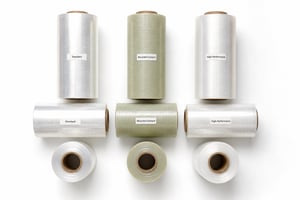
The market itself looks very different from five years ago. At this point, several alternative approaches now offer genuine operational advantages.

Modern stretch films have improved considerably in recent years. Products such as the grip® Film range are designed to provide excellent cling, reliable load stability, and more efficient film usage than conventional wrapping materials. Achieving the same level of containment with less material helps lower packaging costs whilst reducing overall plastic consumption.
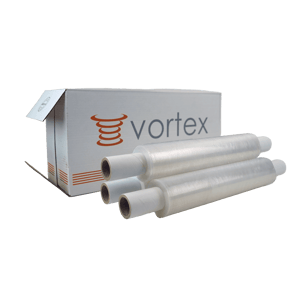
Businesses looking for Plastic Packaging Tax compliant alternatives should also consider Vortex™ pallet wrap. Manufactured with 30% recycled content, the range includes cast, blown, and pre-stretched films that combine high puncture resistance with dependable load security across a wide variety of transport applications.
Recycled-content stretch films are now available across both hand and machine wrapping applications.
Products such as Vortex™ pallet wrap contain 30% recycled content, removing Plastic Packaging Tax liability whilst maintaining the strength, clarity, and consistency expected in demanding warehouse environments. Available in multiple specifications, including cast, blown, and pre-stretched formats, the range enables businesses to improve sustainability without redesigning their existing wrapping process.
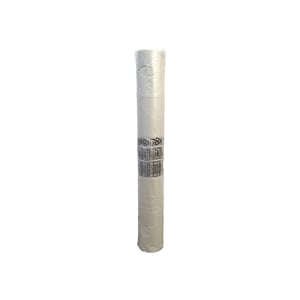
Closed-loop supply chains present another opportunity. Where pallets routinely return to the same warehouse, reusable pallet covers can replace large quantities of single-use wrapping over their working life.
Protective solutions such as Shrink Pallet Covers and Top Sheets also provide weather-resistant protection for palletised goods during storage and transport. They help shield products from dust, moisture, and contamination whilst reducing the likelihood of transit damage on exposed loads.
Although the initial purchase cost is higher, repeated use often delivers lower overall costs across the full lifecycle of reusable systems.
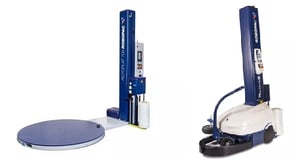
Material choice matters. Application consistency matters just as much. Automatic wrapping systems apply stretch film at controlled tension around every pallet, reducing the variation commonly seen with manual wrapping.
Robopac™ pallet wrapping machines automate the process from start to finish, helping warehouses improve load containment whilst reducing unnecessary film consumption. Intelligent wrapping programmes and consistent tension control remove much of the variation associated with manual application, making them particularly valuable for operations wrapping high pallet volumes every day.
Many businesses discover that improving consistency reduces film consumption regardless of the level of plastic micron they choose.
Which Solution Fits Your Operation?
There is rarely a single answer that suits every warehouse. A high-volume distribution centre shipping thousands of mixed pallets each week has different priorities from a manufacturer delivering repeat loads to the same customer.
As a general guide:
High-volume warehouses
Automated solutions such as Robopac™ pallet wrapping machines paired with recycled-content films, including Loadlok Machine Films, typically provide the strongest combination of wrapping consistency, operational efficiency, and Plastic Packaging Tax compliance.
Closed-loop distribution
Reusable pallet covers often become commercially attractive where pallets regularly return to the same location.
Food and chilled logistics
Perforated stretch film can improve airflow whilst maintaining load containment for temperature-sensitive products.
Businesses pursuing plastic reduction
High-performance films such as the grip® Film range allow operations to reduce overall plastic consumption through more efficient wrapping.
Operations wrapping tall or irregular pallet loads
Consistency becomes more difficult when operators need to reach above shoulder height or wrap unstable loads manually. The grip® Hi-Lo Applicator has been designed specifically for these situations. Its extended reach, lightweight construction, and twist-lock tension control help operators wrap from the pallet base to the top without overreaching or relying on ladders, improving ergonomics whilst maintaining even film application across the entire load.
Many organisations ultimately benefit from using more than one wrapping system rather than expecting a single solution to meet every operational requirement.
Building the Internal Business Case
Operational improvements become much easier to approve when they are supported by clear numbers. Rather than comparing the purchase price of different film rolls, calculate the total annual cost per pallet. Include:
- Annual stretch film consumption
- Labour time
- Plastic Packaging Tax liability
- Waste disposal costs
- Equipment costs where appropriate
A key example: an operation consuming 10 tonnes of stretch film each year with insufficient recycled content would incur £2,288.20 in Plastic Packaging Tax at current rates. That figure alone may justify investigating recycled-content alternatives.
Packaging reviews should also consider handling efficiency. Upgrading to ergonomic equipment such as the grip® Hi-Lo Applicator or introducing Robopac™ pallet wrapping machines can reduce film overuse whilst improving operator productivity, strengthening the financial case beyond material savings alone.
The same review often identifies opportunities to reduce overall film usage, further improving the financial case.
July is an ideal point to complete this exercise. Half-year purchasing data is already available, making it possible to forecast full-year consumption before procurement decisions become fixed for the busy final quarter.
Small Changes Often Deliver the Biggest Savings
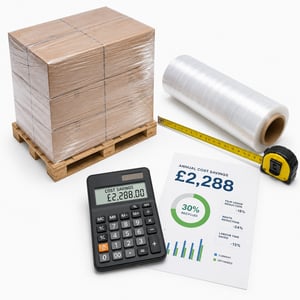
Stretch film rarely attracts much attention because it performs a straightforward task. Wrapping equipment, film specification, pallet protection, and automation all influence the final cost of securing a load. Reviewing the entire wrapping process often uncovers opportunities that simply changing film grade would never reveal.
Reducing unnecessary film usage, selecting recycled-content materials, improving application consistency, or introducing alternative wrapping systems each offer the potential to reduce operating costs whilst supporting compliance and sustainability objectives.
No two warehouses wrap pallets in exactly the same way. That is precisely why reviewing your specification can uncover savings that generic industry benchmarks never reveal.
Ready to Review Your Pallet Wrap?
If your business has not reviewed its pallet wrapping specification recently, now is a good opportunity to do so before the March 2027 Simpler Recycling deadline approaches.
Whether you're considering Vortex™ recycled-content pallet wrap, the grip® Film range, the grip® Hi-Lo Applicator, Robopac™ automated wrapping systems, or Shrink Pallet Covers for additional transit protection, our team can help identify the combination best suited to your operation. We'll assess your current wrapping process, compare alternative materials and equipment, and help you improve load containment whilst reducing unnecessary waste and cost.
Send us a message, call us on 01543 396 700, or email us on sales@allpack.uk.com to get started!