
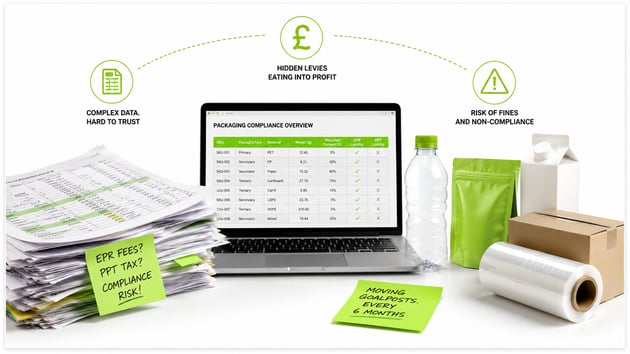
Most retail and FMCG managers have a drawer full of spreadsheets they are quietly terrified to open. It's completely understandable, given that the goal posts for compliance seem to move every six months.
Between Extended Producer Responsibility (EPR) and the Plastic Packaging Tax (PPT), the days of just buying a pallet of bags and forgetting about them are long gone. If you don't have a clear handle on what your estate looks like, you are essentially letting your bottom line bleed out through hidden levies and potential fines.
Where to start when everything feels like a priority
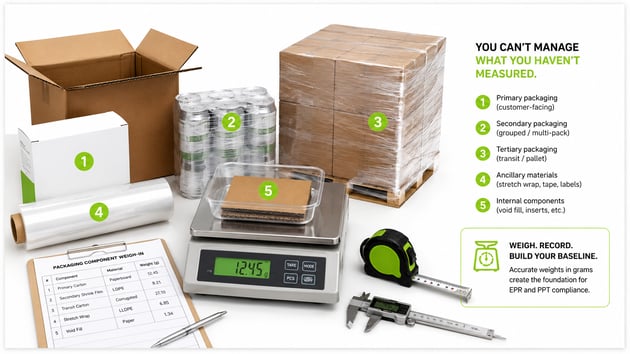
The biggest mistake people make is trying to audit their data from the comfort of their desk using old supplier brochures. Brochures are aspirational, the reality is often found on the warehouse floor. A proper packaging audit for an FMCG business must start with a physical weigh-in.
You can’t manage what you haven't measured. You need to pick five random samples of every single packaging component (from the primary carton to the tiny bit of stretch wrap on the pallet) and get an average weight in grams. It feels tedious, and frankly, it is, but this becomes the baseline for everything else. Once you have the weights, you can start categorising them by material type, which is where the EPR and PPT rules really start to bite.
Sorting the EPR from the PPT
It's helpful to think of EPR as a fee for 'putting stuff out there' and PPT as a tax for 'using the wrong stuff'. For EPR, you need to identify your role in the chain. If you are a brand owner or an importer, you could be, volume dependent, responsible for the disposal costs of the packaging.
You must track primary (the box the customer sees), secondary (the multi-pack shrink wrap), and tertiary (the transit pallet) packaging separately.
For PPT, the focus is purely on plastic. If a component is less than 30% recycled plastic, you will be charged the taxable rate. £228.82 per tonne, effective from April 1, 2026.
Keep an eye out for multi-material items. If you have a cardboard sleeve with a heavy plastic coating and the plastic weighs more than the paper, the whole item is taxed as plastic.
Building the master data sheet
Once you have done the hard graft of weighing and categorising, you need a 'golden record'. This is a live document that lists every SKU alongside its material composition, recycled content percentage, and weights.
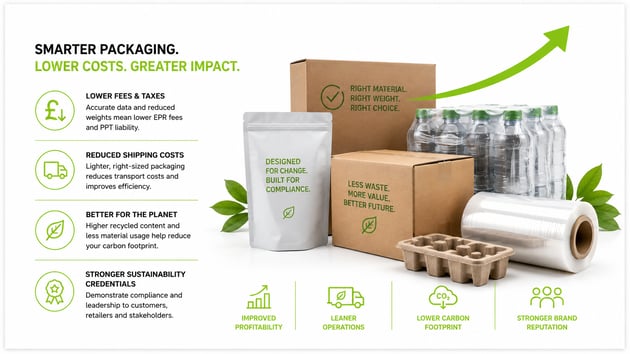
This isn't just a compliance exercise; it’s a massive opportunity for cost-saving. When you see all your packaging formats lined up in a spreadsheet, the process can uncover where savings can be made, by highlighting where packaging can be consolidated or combined, which could thereby reduce the overall packaging weight. This process can help to lower your EPR fees, cut your shipping costs and ideally improve your carbon footprint too.
If you’re reviewing your packaging setup, now is a sensible time to take a closer look at your material data sheets. A quick audit of your weights and recycled content percentages can often reveal a path to both lower taxes and increase sustainability credentials. Send us a message, email sales@allpack.uk.com, or phone us on 01543 396 700 to find out more.