
Returns used to be seen as a cost of doing business online. Annoying, yes. Inevitable, probably. Manageable, hopefully. Now they are something else entirely.
As ecommerce volumes have grown, so have return rates, particularly in sectors like fashion, electronics and homeware. Research from the National Retail Federation shows that returns represent a significant percentage of total retail sales each year, with online purchases consistently returning at higher rates than in-store transactions.
That headline number is only part of the story. Behind every returned item sits transport cost, warehouse handling, inspection time, potential repackaging, restocking or markdown risk. The margin erosion can be uncomfortable when you actually map it out.
And yet, packaging is still often designed for a one-way journey.

Designing for Two Journeys, Not One
Most ecommerce packaging is engineered to get a product safely from warehouse to doorstep. It does that job well enough. What it rarely considers is what happens next. If the box is ripped apart during opening, if it cannot be resealed, if it collapses after first use, it becomes waste rather than a reusable asset. That forces customers to improvise with tape or secondary cartons, which increases damage risk and friction.
Organisations like the Reverse Logistics Association have long highlighted that reverse logistics works best when it is designed into the system, not bolted on afterwards.
A returns-friendly pack might include integrated reseal strips, durable corrugated grades that withstand reopening, or structural formats that retain integrity after first use. None of this needs to be complicated, it just needs to be intentional.
Reducing Handling Time Inside the Warehouse
Returns do not just cost money in freight. They consume labour. When a returned parcel arrives, someone has to open it, assess it, verify SKU, inspect condition and decide whether it goes back to stock, into refurbishment or into clearance. Poor packaging design can slow that process down more than most people realise.
Clear internal labelling, scannable exterior areas that survive transit, minimal over-taping and structurally stable cartons all reduce friction. Analysts at Gartner regularly point out that incremental efficiency gains across high-volume fulfilment operations compound quickly over time.
A few saved seconds per return, multiplied across thousands of units, becomes meaningful.
Lowering Damage-Driven Returns Before They Happen
Not all returns are driven by customer preference. Many are driven by avoidable transit damage.
The Pitney Bowes Parcel Shipping Index consistently highlights the continued growth in parcel volumes globally.More parcels in the network means more handling points, more movement and more opportunity for impact stress. If a product is floating inside an oversized stock carton, protected by loosely added void fill, the risk increases.
Custom-fit packaging reduces movement, reduces the need for excessive filler and often improves stacking stability. That alone can quietly reduce the number of damage-triggered returns, which is arguably the most expensive type of return because it is entirely preventable.
The Customer Experience Factor
Returns are emotional moments. Customers are either reassured or frustrated. A simple reseal strip, clear instructions and packaging that still looks structurally sound after opening can make the process feel smooth. Brands like those studied in the Narvar State of Returns reports have found that easy returns processes correlate with higher repeat purchase intent.
No one buys from a brand hoping to return something, but if they need to, the experience tends to shape whether they come back. Packaging plays a quiet but central role in that perception.
Thinking in Total Return Cost, Not Box Cost
It is tempting to evaluate packaging purely on unit price. A few pence saved per carton looks attractive in isolation. But what is the cost per returned order when you factor in reverse freight, warehouse time, rework, markdown risk and customer service handling?
Designing packaging that supports both outbound protection and inbound efficiency shifts the economics. The box becomes part of the reverse logistics strategy, not just a shipping container. And often, the cost increase at unit level is smaller than the savings achieved across the lifecycle.
Common Misconceptions
Returns-friendly packaging does not automatically mean expensive. It means considered. Returns are not completely unavoidable, especially those driven by damage. And this is not only a fashion problem. Any ecommerce sector experiencing double-digit return rates should be thinking about this.
Boomerang Boxes and Bags: Built For The Return Journey
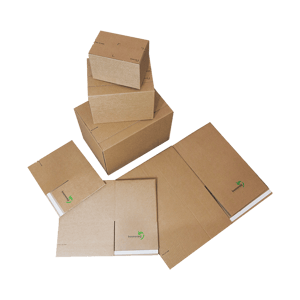
One example of this thinking in practice is our Boomerang Rapid Return packaging range. Both boxes and mailing bags in the Boomerang range are designed specifically for ecommerce environments where returns are expected rather than exceptional.
The concept is straightforward but effective. The packaging includes dual adhesive strips and integrated opening mechanisms so customers can open their delivery cleanly and then reseal the same package for the return. This eliminates the need for additional tape, spare boxes or improvised packaging at home. The parcel simply goes back through the network in the same format it arrived in.
Alongside this functional design, Boomerang boxes and bags can also be customised with bespoke printing. That allows businesses to maintain brand presence while also including clear return instructions, QR codes or messaging that guides the customer through the process. It is a small detail, but it often reduces confusion and unnecessary support enquiries. Packaging becomes part of the returns communication rather than just the container.
Looking at the Bigger Picture
Reverse logistics is rarely glamorous. It does not feature heavily in marketing campaigns. Yet it quietly shapes profitability and customer loyalty.
Designing packaging for two journeys instead of one feels like a small shift in thinking, but operationally it can be significant. Fewer damaged returns, smoother inspections, faster restocking, less frustration for customers.
If you are reviewing your ecommerce packaging this year, it may be worth asking a simple question: is it built for the way your products actually move, including the journey back? To help in your answer this question, check out our related thought leadership articles for key packaging insights and more.
If you would like to explore how returns-friendly custom packaging could support your reverse logistics strategy, we are always happy to talk through your current setup. You can send us a message, email sales@allpack.uk.com or call 01543 396 700 to start a practical conversation about reducing return costs without compromising protection.