
As we move through Q1 of 2026, it is becoming increasingly clear that packaging now plays a much bigger role in shaping how businesses operate and plan for the future. What used to be seen as a supporting function is now actually sitting much closer to board-level thinking, largely because regulation is tightening, costs are under more pressure, and customers are expecting brands to be more responsible and transparent than in previous years.
As you can imagine, the organisations that recognise this shift early are the ones that will move forward with greater confidence, stronger efficiency, and far fewer unexpected challenges.
Here are a few of the key trends that are already gaining momentum for 2026.
Sustainability is the Baseline

Sustainable packaging is becoming the default channel to drive value. Brands are simplifying materials to improve recyclability, increasing recycled content to meet Extended Producer Responsibility (EPR) and Plastic Packaging Tax (PPT) requirements and reducing overall material use through lighter, more efficient designs.
If we look at policy direction, the UK’s Plastic Packaging Tax continues to push businesses toward higher recycled content. Meanwhile, Extended Producer Responsibility continues to reshape reporting, financial accountability, and material choices. Industry bodies such as WRAP are reinforcing the move to recyclable and circular packaging systems. Refillable and reusable models are also gathering momentum, particularly in household, cosmetic, grocery, and beverage sectors, even if adoption is still uneven.
As many in the industry have expected, sustainability has shifted from “nice to have” to a very real operational and commercial requirement.
Smart Packaging Moves from Novelty to Necessity

We are seeing QR codes, digital product passports, and connected labelling becoming much more mainstream. These tools support traceability, product authentication, compliance and customer transparency, particularly as supply chains become more regulated and more closely monitored.
The European Union is pushing Digital Product Passport frameworks, which will influence expectations globally. GS1 continues to strengthen standards for scannable, data-rich product identifiers.
In the food and pharmaceutical industries, especially, freshness sensors, tamper-evidence indicators, and smart condition monitoring are transitioning from pilot innovation to real-world supply chains. Discover our food-grade packaging solutions here.
These growing initiatives suggest packaging is quietly becoming part of an information system, lifting it to have greater impact than that of just a physical container.
Automation and AI Couple to Reshape Packaging Operations
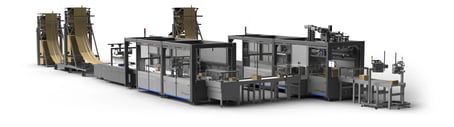
Rising labour costs, throughput demands, skills shortages and operational efficiency requirements are accelerating investment in packaging automation.
We are seeing increasing adoption of robotic handling, automated packing systems, machine vision, and AI-assisted optimisation to reduce manual dependency, improve consistency, and control costs. McKinsey outlines how AI is streamlining manufacturing through smarter decision-making and predictive capability. Similarly, industry research recognises the growing role of automation in boosting resilience, lowering waste, and maintaining performance standards.
In reality, this is less about futuristic robotics and more about practical, reliable automation that protects uptime and improves accuracy.
Regulation Continues to Tighten
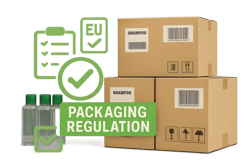
Packaging now sits squarely in the compliance and cost-control conversation. Extended Producer Responsibility reporting, clearer recyclability expectations, and increased transparency requirements are changing how packaging is designed, sourced, and managed.
The UK Government continues to evolve regulations around packaging accountability.
At the same time, global policy direction is very clearly favouring circularity and waste reduction, as outlined by the Organisation for Economic Co-operation and Development (OECD).
This means packaging decisions now have direct financial, legal and reputational implications, not just operational ones. For business, that changes the conversation significantly.
Design is Now More Consumer-Focused

Consumers expect packaging to do more with less. Cleaner design, clearer labelling, easier-open functionality and improved accessibility are increasingly seen as standard expectations.
At the same time, packaging still needs to protect product integrity, communicate brand quality, and support sustainability goals. It is about smarter simplicity rather than excess.
What This All Really Means in Practice
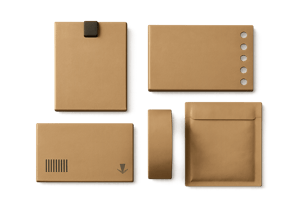
For most businesses, the next two years will be about finding the right balance between compliance, cost, performance, and customer experience, which will require drawing upon:
- Smarter material choices
- Packaging designed for recyclability and real-world handling
- Investment in automation where it genuinely adds value
- Better data and traceability
- And importantly, robust and experienced supply partners
To safeguard risk in a fast-moving supplier chain, resilience, clarity, and practicality will matter far more than chasing headline-grabbing innovations.
If you would like to talk through how these trends could affect your packaging setup heading into 2026, we are here to help. Get in touch by sending a message, emailing sales@allpack.uk.com or calling us on 01543 396 700 to explore what this might mean for your organisation and provide scalable solutions tailored to your operation.